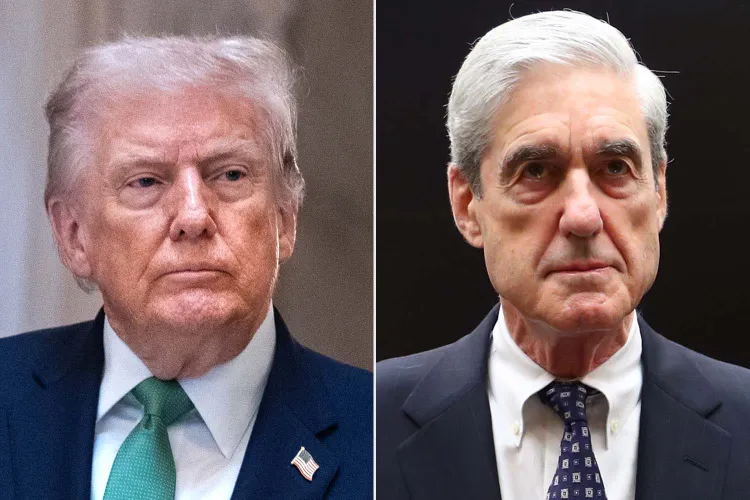
Trump Celebrates Death of Robert Mueller, Former FBI Director Who Investigated President’s Ties to Russia: ‘Good, I’m Glad’
Trump Celebrates Death of Robert Mueller, Former FBI Director Who Investigated President’s Ties to Russia: ‘Good, I’m Glad’
Robert S. Mueller III, the former FBI director and federal prosecutor who led a probe into President Donald Trump‘s ties to Russia, has died. He was 81.
Mueller’s family announced his Friday, March 20, death in a statement on March 21. “With deep sadness, we are sharing the news that Bob passed away,” they said, according to the Associated Press.
“His family asks that their privacy be respected,” the statement continued. A specific location or cause of death was not shared.
In a Truth Social post, Trump, 79, reacted to the news, writing, “Robert Mueller just died. Good, I’m glad he’s dead. He can no longer hurt innocent people!”
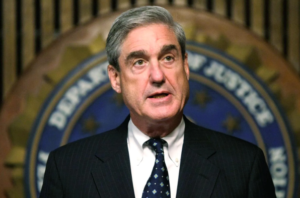
Robert S. Mueller III, the former FBI director and federal prosecutor who led a probe into President Donald Trump‘s ties to Russia, has died. He was 81.
Mueller’s family announced his Friday, March 20, death in a statement on March 21. “With deep sadness, we are sharing the news that Bob passed away,” they said, according to the Associated Press.
“His family asks that their privacy be respected,” the statement continued. A specific location or cause of death was not shared.
In a Truth Social post, Trump, 79, reacted to the news, writing, “Robert Mueller just died. Good, I’m glad he’s dead. He can no longer hurt innocent people!”
In August 2025, Mueller’s family announced that he had been diagnosed with Parkinson’s disease four years prior and had started to experience difficulty speaking and mobility issues.
“Bob was diagnosed with Parkinson’s disease in the summer of 2021,” the family said in a statement to The New York Times. “He retired from the practice of law at the end of that year. He taught at his law school alma mater during the fall of both 2021 and 2022, and he retired at the end of 2022. His family asks that his privacy be respected.”
The revelation came as Mueller was being called to testify before a congressional committee that was looking into the Trump administration’s handling of evidence related to Jeffrey Epstein’s alleged sex crimes. At the time, his family said, his condition made him unable to testify.
Mueller was born in Manhattan on Aug. 7, 1944, the oldest of five children, with four younger sisters. He grew up in Princeton, N.J., before attending St. Paul’s School in Concord, N.H., where he was classmates and lacrosse teammates with future Democratic senator and presidential candidate John Kerry.
He received a bachelor’s degree in politics from Princeton University and a master’s degree in international relations from New York University before enlisting in the United States Marine Corps. For his service during the Vietnam War, Mueller earned several military decorations and awards, including a Bronze Star and a Purple Heart.
In a 2010 commencement address at the Duke University College of Law, Mueller told the crowd, “I consider myself exceptionally lucky to have made it out of Vietnam. There were many — many — who did not. And perhaps because I did survive Vietnam, I have always felt compelled to contribute.”
After returning from Vietnam, Mueller continued his academic career at the University of Virginia School of Law. He earned his juris doctor and began working as a litigator and in U.S. Attorney’s offices in California and Massachusetts.
In 1990, Mueller became the U.S. Assistant Attorney General in charge of the Justice Department’s Criminal Division, overseeing cases like the prosecution of Panamanian leader Manuel Noriega, the Lockerbie bombing, and the takedown of the Gambino crime boss John Gotti.
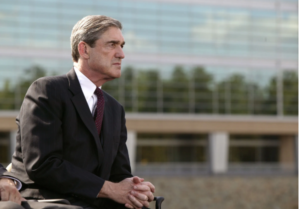
Following a brief return to private practice, Mueller was nominated by President George W. Bush to become the Federal Bureau of Investigation’s sixth director. He was unanimously confirmed and took office one week before the terror attacks of Sept. 11, 2001.
Mueller served as FBI director throughout Bush’s two presidential terms, and was asked by his successor, President Barack Obama, to stay on for two additional years when his 10-year term expired. The Senate again confirmed this request unanimously, and Mueller stayed in the role until 2013.
Term limits prevented Mueller from returning as FBI director in future administrations; however, in May 2017, he was appointed as special counsel for the Justice Department, tasked with leading an investigation into alleged ties between the Russian government and Trump’s 2016 presidential campaign.
In a statement obtained by PEOPLE, the FBI reacted to Mueller’s death, describing him as a “lifelong public servant — a decorated Marine, a Vietnam veteran, a Department of Justice prosecutor, and FBI Director in the years following the September 11, 2001 terrorist attacks.”
“Director Mueller led the Bureau during a period of significant change and played an important role in strengthening its ability to confront evolving national security threats while maintaining its core criminal investigative mission,” the government organization added.
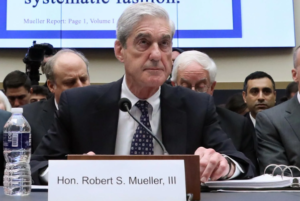
After gathering evidence for nearly two years — during which he was frequently targeted by President Trump, who dismissed the investigation as a “witch hunt” — Mueller compiled a 448-page report that detailed his findings.
In a statement at the time, Mueller highlighted the unique constraints of investigating Trump, noting that, while his team had authority to charge co-conspirators with crimes, the Constitution bars a sitting president from being charged through the traditional criminal justice system. Therefore, Mueller warned, “It would be unfair to potentially accuse [a president] of a crime when there can be no court resolution of an actual charge.”
In line with that thinking, Mueller said, he could not conclude “one way or the other” whether Trump had obstructed justice.
“While this report does not conclude that the president committed a crime, it also does not exonerate him,” then-Attorney General Bill Barr wrote in a letter to Congress, quoting Mueller.v